
Hypothetical frequencies as approximations
Hypothetical frequencies are great approximations (inexact descriptions of a target) but bad idealizations (separate models that bear analogies to the target).

Hypothetical frequencies are great approximations (inexact descriptions of a target) but bad idealizations (separate models that bear analogies to the target).

Hilbert bimodules are morphisms between C*-algebraic models of quantum systems, while symplectic dual pairs are morphisms between Poisson geometric models of classical systems. …


A core tenet of Bayesian epistemology is that rational agents update by conditionalization. Accuracy arguments in favour of this norm are well-known. Meanwhile, scholars working in …


I argue that we can use symmetries of the quantum state space to derive chance values in the de Broglie–Bohm pilot-wave theory.

Recently, there has been some discussion of how Dutch Book arguments might be used to demonstrate the rational incoherence of certain hidden variable models of quantum theory. In …
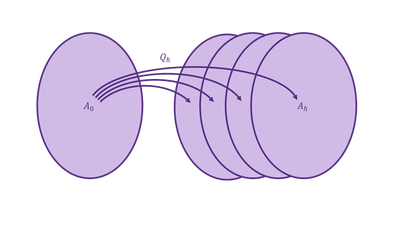
Bundles of C*-algebras can be used to represent limits of physical theories whose algebraic structure depends on the value of a parameter. The primary example is the ℏ → 0 limit of …

We argue against claims that the classical ℏ → 0 limit is “singular” in a way that frustrates an eliminative reduction of classical to quantum physics. We show one precise sense in …

I defend an analog of probabilism that characterizes rationally coherent estimates for chances. Specifically, I demonstrate the following accuracy-dominance result for stochastic …