
Everettian chance in no uncertain terms
We unify Everettian accounts of chance by focusing on the conditions under which branches are isolated.

We unify Everettian accounts of chance by focusing on the conditions under which branches are isolated.

We unify Everettian accounts of chance by focusing on the conditions under which branches are isolated.

We unify Everettian accounts of chance by focusing on the conditions under which branches are isolated.

This project develops novel technical results about the probabilities appearing in quantum mechanics that bridge and support several different interpretations of what that theory …

Hilbert bimodules are morphisms between C*-algebraic models of quantum systems, while symplectic dual pairs are morphisms between Poisson geometric models of classical systems. …

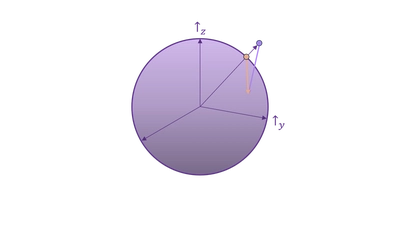
A core tenet of Bayesian epistemology is that rational agents update by conditionalization. Accuracy arguments in favour of this norm are well-known. Meanwhile, scholars working in …


I argue that we can use symmetries of the quantum state space to derive chance values in the de Broglie–Bohm pilot-wave theory.

Recently, there has been some discussion of how Dutch Book arguments might be used to demonstrate the rational incoherence of certain hidden variable models of quantum theory. In …
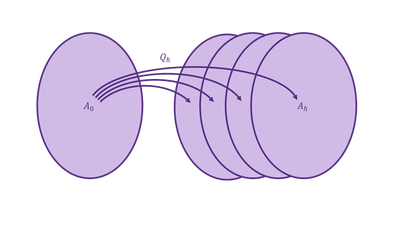
Bundles of C*-algebras can be used to represent limits of physical theories whose algebraic structure depends on the value of a parameter. The primary example is the ℏ → 0 limit of …
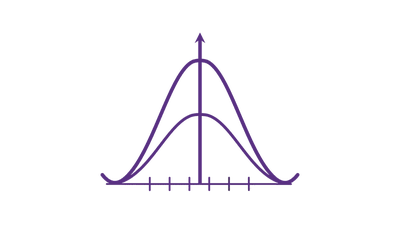
We argue against claims that the classical ℏ → 0 limit is “singular” in a way that frustrates an eliminative reduction of classical to quantum physics. We show one precise sense in …